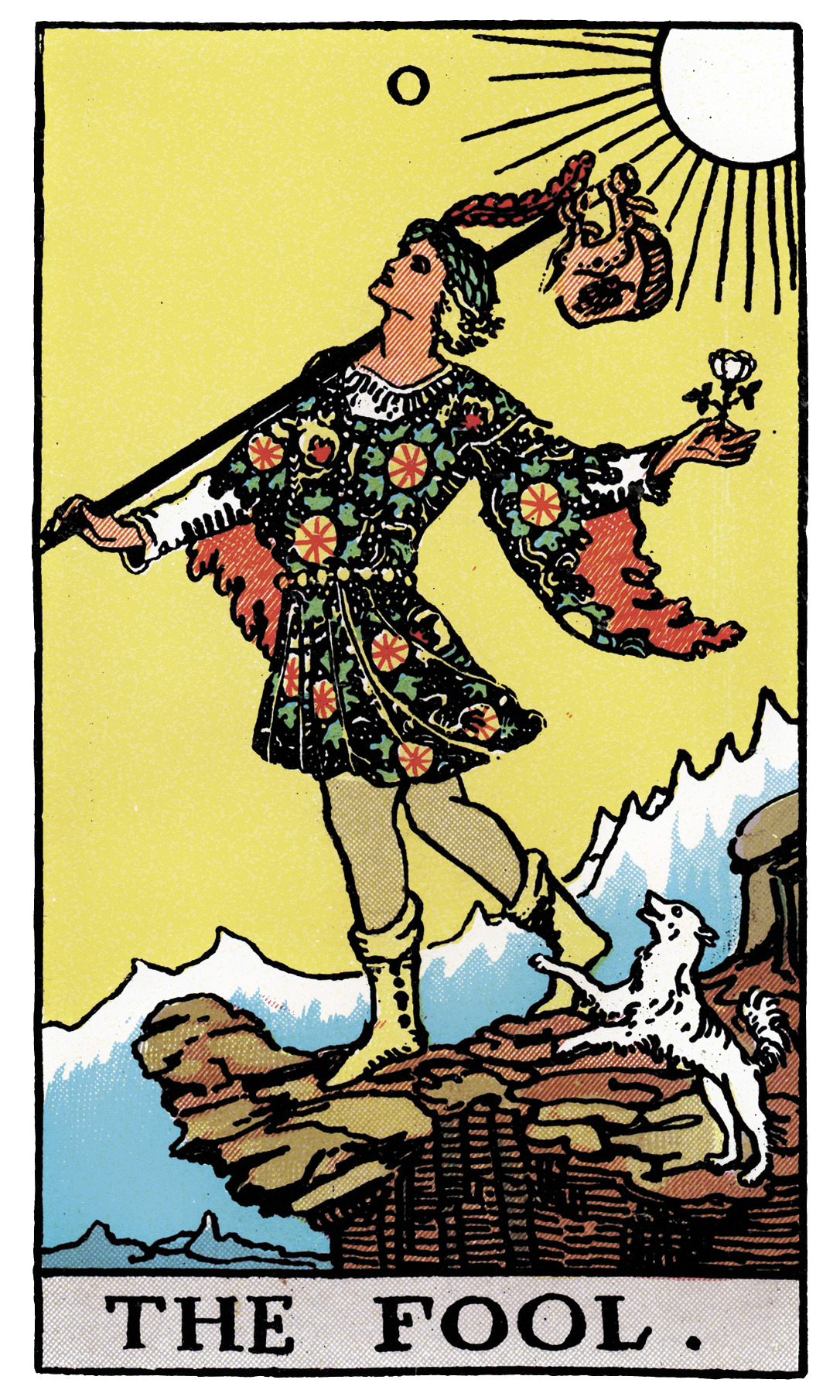
The tarot deck splits into two parts: the 56-card Minor Arcana, which plays out in day-to-day detail the way a standard deck of playing cards might, and the 22-card Major Arcana, which carries the big, archetypal themes. When a Major Arcana card shows up in a reading, it's usually a signal that something significant — not incidental — is at play.
The Fool's Journey
Numbered 0 through 21, the Major Arcana is traditionally read as a single story called the Fool's Journey. The Fool (0) sets out with nothing but openness and trust. Along the way they encounter mentors and tests — the Magician's willpower, the High Priestess's intuition, the Wheel of Fortune's reminder that change is constant — before arriving at the World (21), a card of completion and integration. You don't need to memorize this arc to read tarot well, but knowing it helps you place any single Major Arcana card within a larger pattern of growth.
Why they read differently than Minor Arcana cards
Minor Arcana cards (the suits of Wands, Cups, Swords, and Pentacles) tend to describe circumstances: a conversation, a financial decision, a burst of creative energy. Major Arcana cards describe forces: transformation, upheaval, love, loss, awakening. If a spread is dominated by Major Arcana cards, it's often a sign that the question you're asking touches on something bigger than a single event — a life chapter rather than a Tuesday afternoon.
Getting started
A good way to build familiarity is to pull one Major Arcana card at a time using the Flash Tarot Training tool and filter to "Major Arcana Only." Focus less on memorizing a fixed definition and more on noticing the theme each card returns to across different readings — that's what will make your interpretations feel alive instead of recited.